
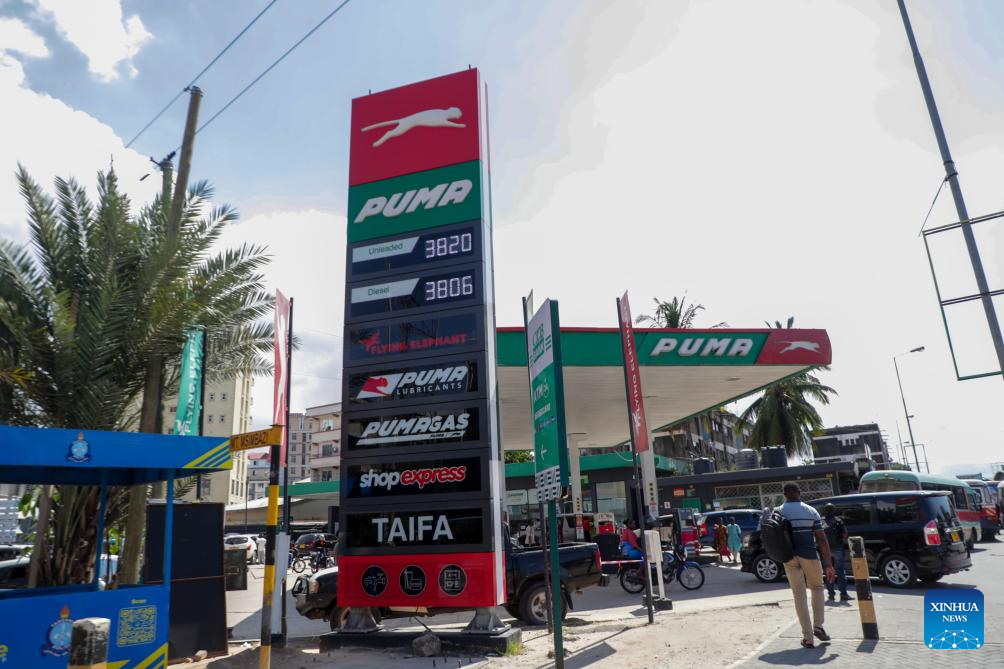
Gas prices are displayed at a gas station in Dar es Salaam, Tanzania, on April 4, 2026. (Photo by Emmanuel Herman/Xinhua)
DAR ES SALAAM, April 7 (Xinhua) -- Every morning before sunrise, Herry Msese steers his commuter minibus through the bustling streets of Dar es Salaam, Tanzania, transporting dozens of passengers along the busy route.
In recent weeks, however, fuel has emerged as his biggest concern.
"This is a big challenge," said the driver of a local minibus, also known as "dala dala." "Every day, I must submit 110,000 Tanzanian shillings (about 43 U.S. dollars) to the vehicle owner."
Previously, fuel costs averaged around 90,000 shillings per day, but have lately reached about 150,000 shillings.
On a good day, the amount a bus can earn at best is merely 260,000 shillings. "This means almost everything I earn goes into fuel," he said.
The sharp increase in fuel prices follows escalating geopolitical tensions in the Middle East involving the United States, Israel, and Iran. Disrupted global oil supply chains have sent crude oil prices soaring and affected fuel-importing countries like Tanzania.
"I don't know what should be done," Msese added. "Maybe the government should reduce taxes, or fuel prices should come down. Most importantly, this war should end."
After covering all daily expenses, he was left with just 7,000 shillings. "If things get worse, I may have to look for another job."
Tanzania is experiencing one of the steepest fuel price increases in recent years, given the latest review by the Energy and Water Utilities Regulatory Authority.
Under the new pricing structure, petrol now sells at 3,820 shillings per liter, up from 2,864 shillings in March. Diesel has climbed to 3,806 shillings, while kerosene now costs 3,684 shillings per liter.
The fuel price hikes are spreading rapidly across the Tanzanian economy, affecting transportation, food costs, and household budgets.
For Zena Omary, a 28-year-old mother of three children and owner of a food stall at Mawasiliano market, commutes daily from Kitunda to Ubungo, relying on public transport and sometimes motorcycle taxis.
"Transport fares have not officially been increased, but drivers are charging more," she said.
Omary noted that her customers, many of whom are commuters themselves, often share similar struggles. "They explain their situation, and I understand because I am also affected."
As most goods are transported into the city by fuel-dependent vehicles, Omary was forced to raise the price of a plate of food from 2,000 to 2,500 shillings.
"I had no choice," she said. "The cost of ingredients and transport has increased."
Despite the adjustment, she held an uncertain picture of the future. "In the next few weeks, I don't know what will happen," Omary said. "I am worried about whether my business will survive."
At Kariakoo Market, a major trading hub in Dar es Salaam, Erick Matemba was struggling to keep his mobile phone business afloat.
"Most of the phones we sell are imported from Dubai. But for about three weeks now, we have not received new stock," said the 35-year-old Tanzanian.
Supply disruptions slowed shipments, leading to shortages of phones and accessories. Higher fuel costs also drove up delivery charges, with a trip that once cost 5,000 shillings now running around 8,000 shillings.
"We are forced to increase prices slightly to cover these costs," Matemba explained.
In remote parts of the country such as Ngorongoro in the Arusha region, petrol prices have even exceeded 4,000 shillings per liter. Other cities, including Dodoma and Mwanza, have also recorded significant increases.
Economists warn that rising fuel prices could trigger broader inflationary pressures. As transportation and production costs rise, businesses are likely to pass these costs on to consumers.
There are also concerns about currency pressures. As Tanzania spends more U.S. dollars on fuel imports, demand for foreign currency could increase, potentially weakening the Tanzanian shilling and making imports even more expensive.
While Tanzania's economy stayed relatively resilient, with steady growth and manageable inflation levels, local households are navigating a difficult economic landscape shaped by forces far beyond their borders.
Back on the streets of Dar es Salaam, Msese continues his daily routine. "We are just waiting to see how things go," he said. "But if things don't improve, many of us will not be able to continue." ■
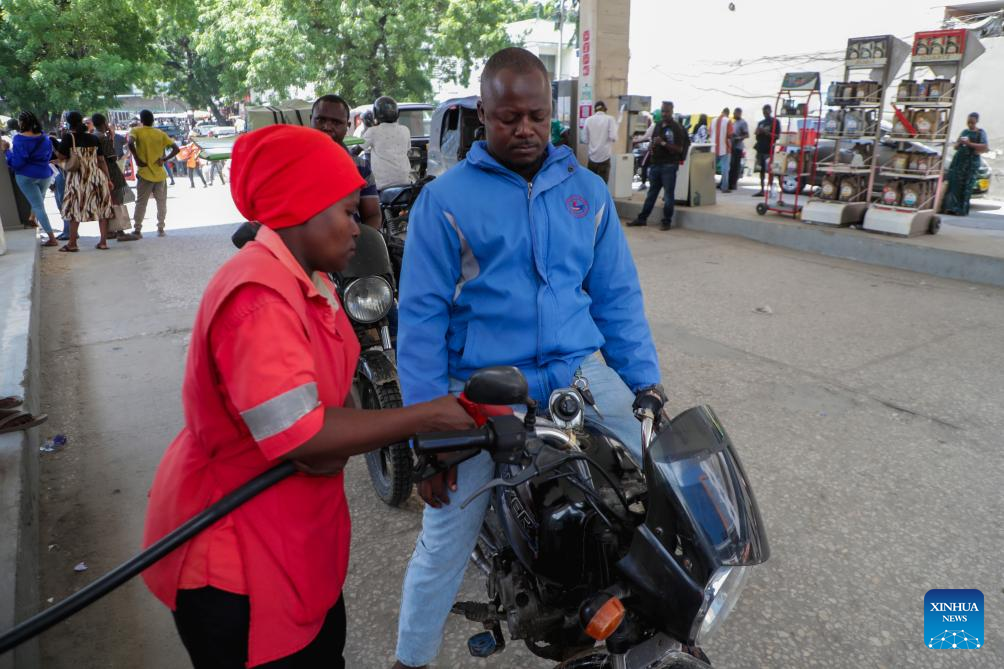
A staff worker refuels a motorbike at a gas station in Dar es Salaam, Tanzania, on April 4, 2026. (Photo by Emmanuel Herman/Xinhua)
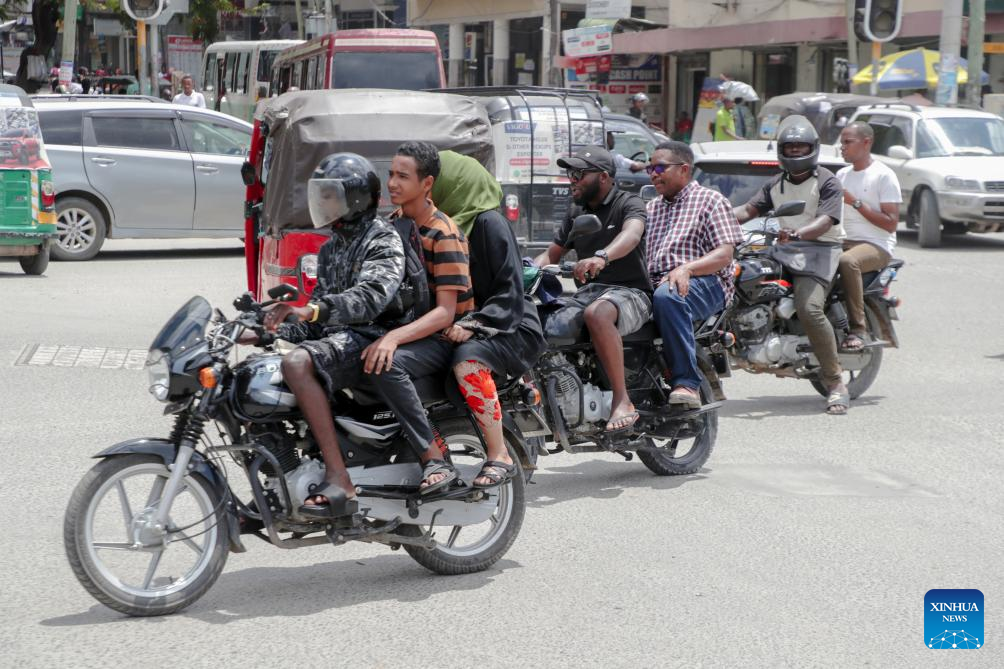
People travel by motorcycle in Dar es Salaam, Tanzania, on April 4, 2026. (Photo by Emmanuel Herman/Xinhua)
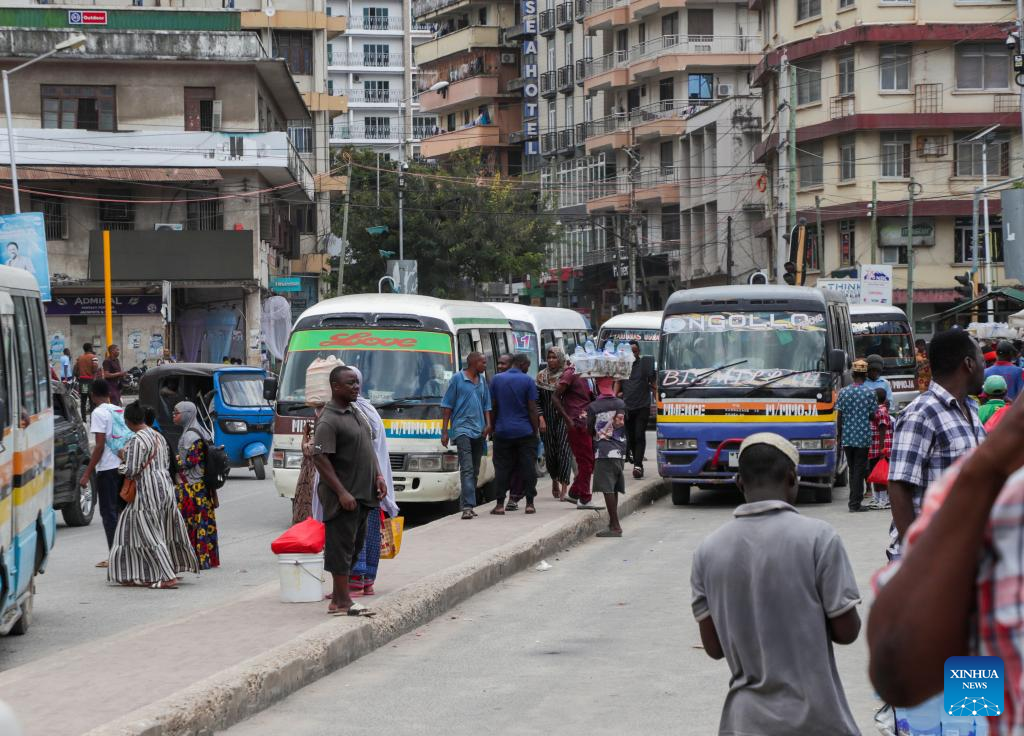
People travel by minibus in Dar es Salaam, Tanzania, on April 4, 2026. (Photo by Emmanuel Herman/Xinhua)
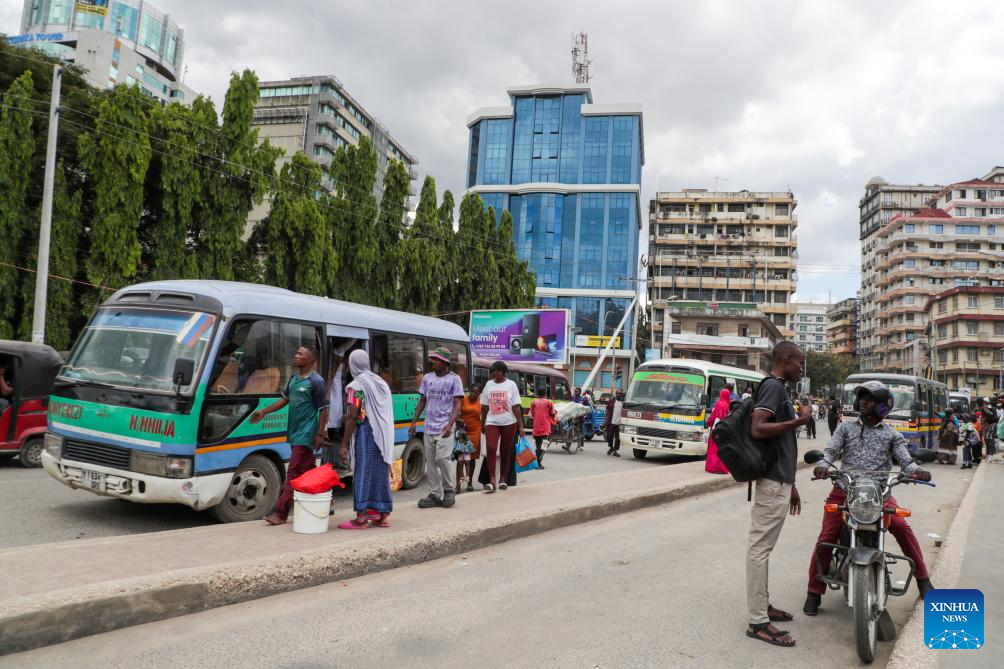
People travel by minibus in Dar es Salaam, Tanzania, on April 4, 2026. (Photo by Emmanuel Herman/Xinhua)
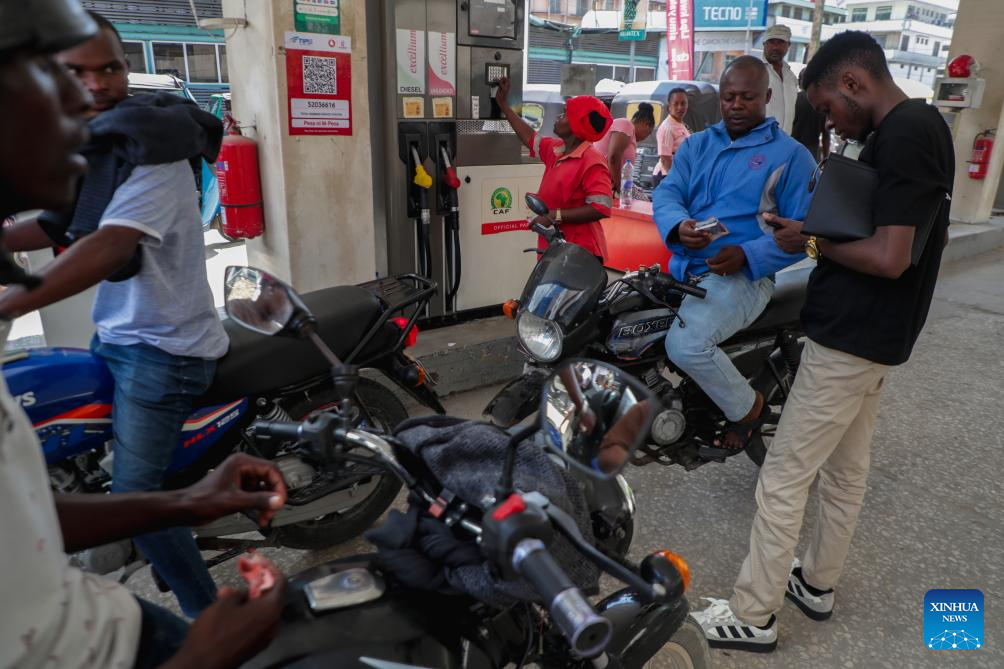
A man refuels his motorbike at a gas station in Dar es Salaam, Tanzania, on April 4, 2026. (Photo by Emmanuel Herman/Xinhua)