Spring holiday consumption breathes fresh energy into China's economy

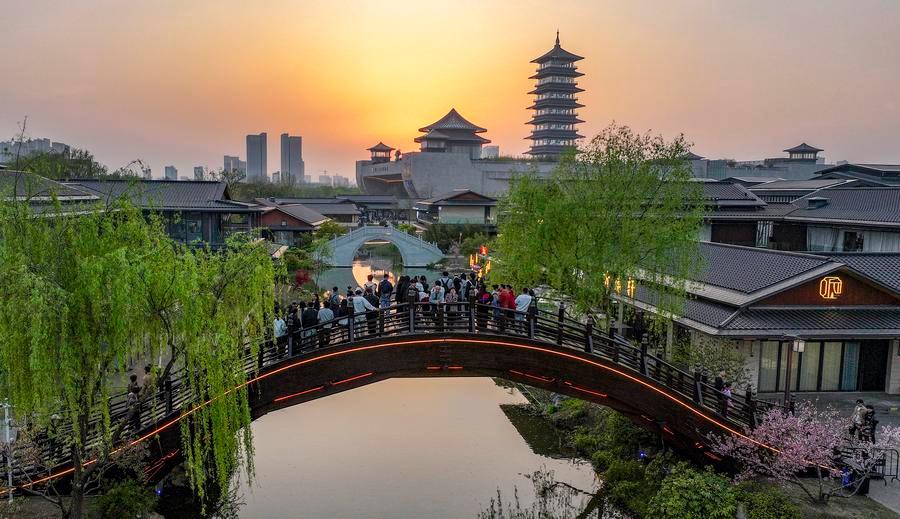
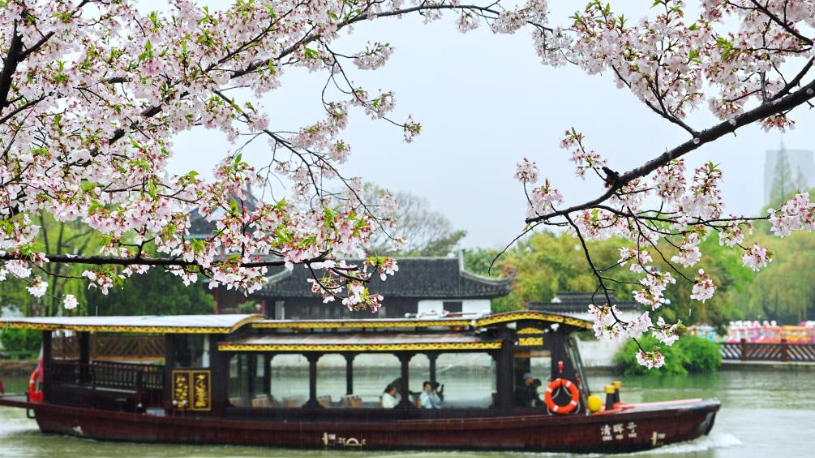
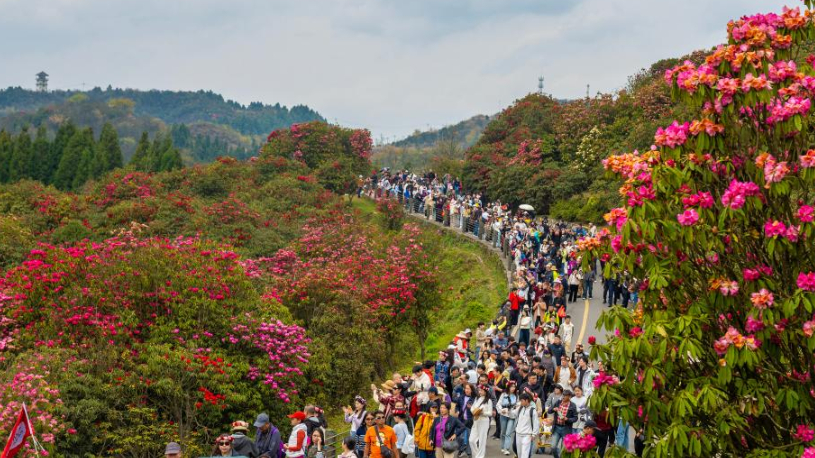
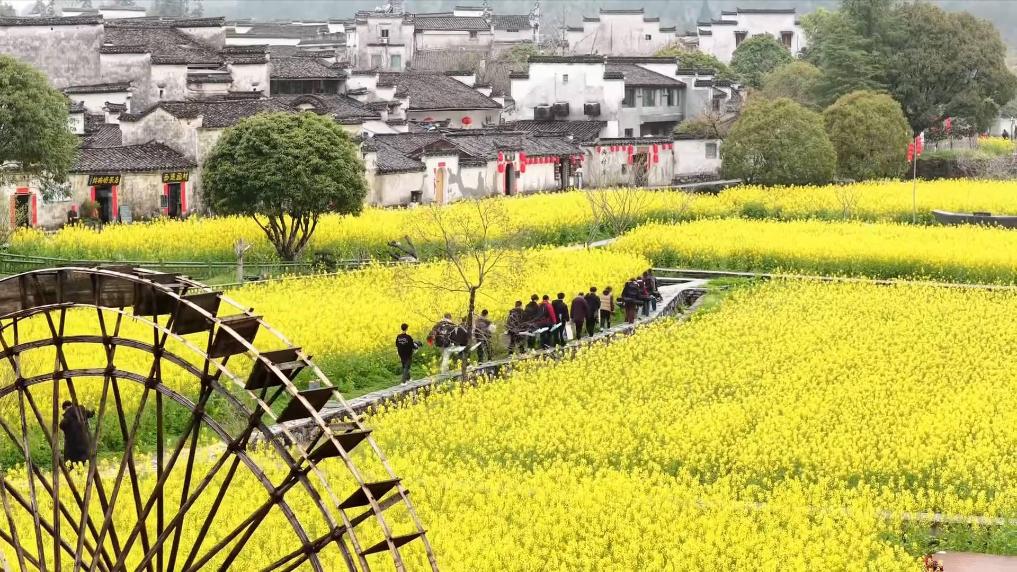
BEIJING, April 7 (Xinhua) -- China's spring holidays are emerging as revealing windows into the country's economic vitality. From mountain flower fields and traditional culture streets to virtual reality experience halls, surging visitor flows across the country reflect an upgrading consumer market that is generating new growth momentum for the broader economy.
During the Qingming Festival holiday which lasted from April 4 to 6, visitors at Nishan Sacredland, a Confucian cultural theme park in Qufu, east China's Shandong Province, bowed in reverence holding fresh flowers and recited passages from The Analects of Confucius in unison, guided by ceremonial hosts.
"I brought my children here during the spring break specifically to experience Confucian culture. It's both a vacation and an educational trip," said Zhu Xuan, a visitor who traveled from neighboring Jiangsu Province, also in east China.
This tourist site, together with nearby ancient cultural village Luyuan, saw a peak in visitor traffic during the recent holiday, receiving a combined total of over 60,000 visitors.
This year, several provinces including Jiangsu, east China's Anhui and Sichuan in southwest China arranged spring breaks for primary and middle school students in early April, linked to the three-day Qingming Festival holiday to create an extended break of nearly a week.
Qingming Festival, also known as Tomb-Sweeping Day, fell on April 5 this year. It is a traditional Chinese festival for people to pay tribute to the dead and worship their ancestors, while also providing a short break for people looking to engage in outdoor activities and sightseeing.
The new spring breaks for schools sparked a wave of family and parent-child travel, generating a full-chain consumption boom spanning transport, cultural tourism and accommodation.
Data from travel platform Qunar showed that the share of travelers journeying more than 800 kilometers rose by over 30 percent during this year's Qingming Festival holiday, while the number of air passengers aged 13 to 18 surged by 70 percent. Another platform, Fliggy, reported that domestic hotel reservations were up roughly 40 percent year on year, with scenic spot ticket bookings soaring by more than 70 percent.
Analysts believe the introduction of spring breaks gives travelers more flexibility in planning trips, which is conducive to the tourism market.
"With the previous constraint of short-haul-only Qingming travel now broken, the tourism market has welcomed its first peak this spring," said Wei Xiang, a researcher at the Chinese Academy of Social Sciences.
Behind the travel boom lies a deeper shift: consumers are increasingly seeking upgraded service experiences that go well beyond traditional sightseeing and accommodation.
At a digital technology experience center in Xi'an, northwest China's Shaanxi Province, visitors donning smart glasses found themselves immersed in the ancient splendor of the Tang Dynasty (618-907) capital of Chang'an, while intelligent robots brewed and served steaming cups of tea.
"We have added new experiences including Tang-costume robots and digital cultural guides, giving visitors a distinctive taste of Tang-era Chang'an," said staff member Zou Linfeng, adding that visitor numbers on the first day of the holiday rose 23 percent year on year.
An ocean park in east China's Shanghai, meanwhile, recently launched a festival showcasing 20 species of exotic marine life, alongside a science education program. In Changsha, central China's Hunan Province, a traditional arts center offering intangible cultural heritage experiences, including dough sculpting, drew more than 13,000 visitors on the holiday's opening day.
"The shift from scenic sightseeing to immersive, experiential products is becoming increasingly pronounced," said Han Yuanjun, a researcher at the China Tourism Academy. Family travel with stronger cultural and educational content, such as themed study tours, is growing rapidly, he added.
Data from the Ministry of Commerce revealed that theme park spending rose 11.7 percent from a year earlier during the 2026 Qingming Festival holiday, while parent-child study tour bookings doubled, suggesting robust service consumption.
China is actively promoting service consumption as a new driver of economic growth. In the first two months of this year, service retail sales grew 5.6 percent year on year, outpacing goods retail growth by a clear margin. In 2025, service consumption accounted for 46.1 percent of per capita household spending, making it a key engine of domestic demand.
This year's government work report announced initiatives to upgrade services to the benefit of consumers, develop a number of new, high-profile consumption scenarios with broad appeal, and move faster to nurture new areas of consumption growth.
By 2030, per capita service consumption among urban and rural residents is projected to surpass 18,000 yuan (about 2,614 U.S. dollars), with service spending potentially accounting for 55 to 60 percent of total household consumption, analysts said. ■




Comments